Yatzy
The table game, on one screen or eight
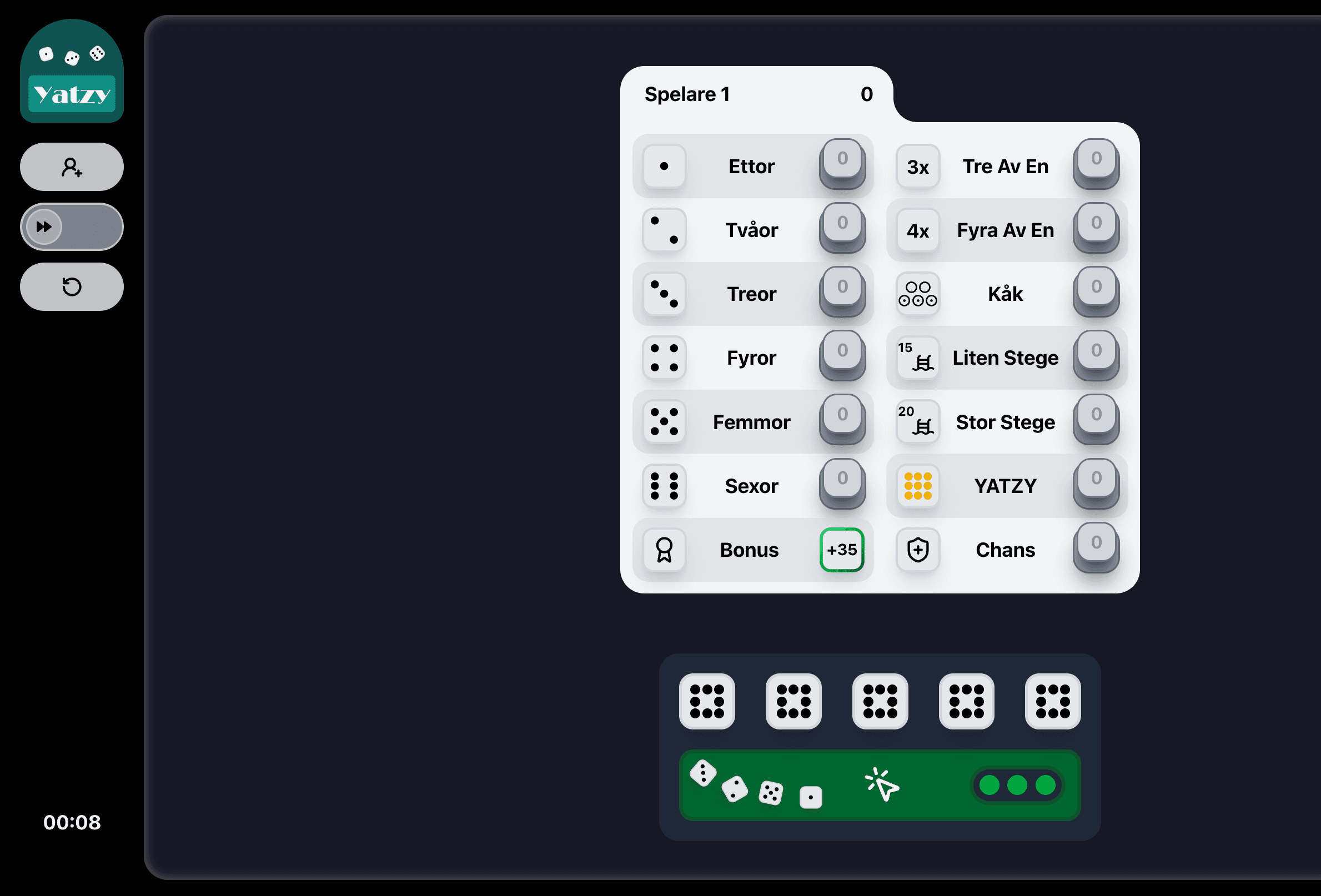
A complete Yatzy game in the browser, rebuilt from the ground up to play as well on a phone as on a desktop. Play alone, pass one device around a table of up to eight, or open a room online and let everybody play from their own screen in real time.
- Live
- 1 to 8
- One screen or online
The point
Almost every dice game online is built for one person playing against software. Yatzy at a table is a different game. It is social, it is slow in a good way, and the scoresheet is the thing everybody is watching.
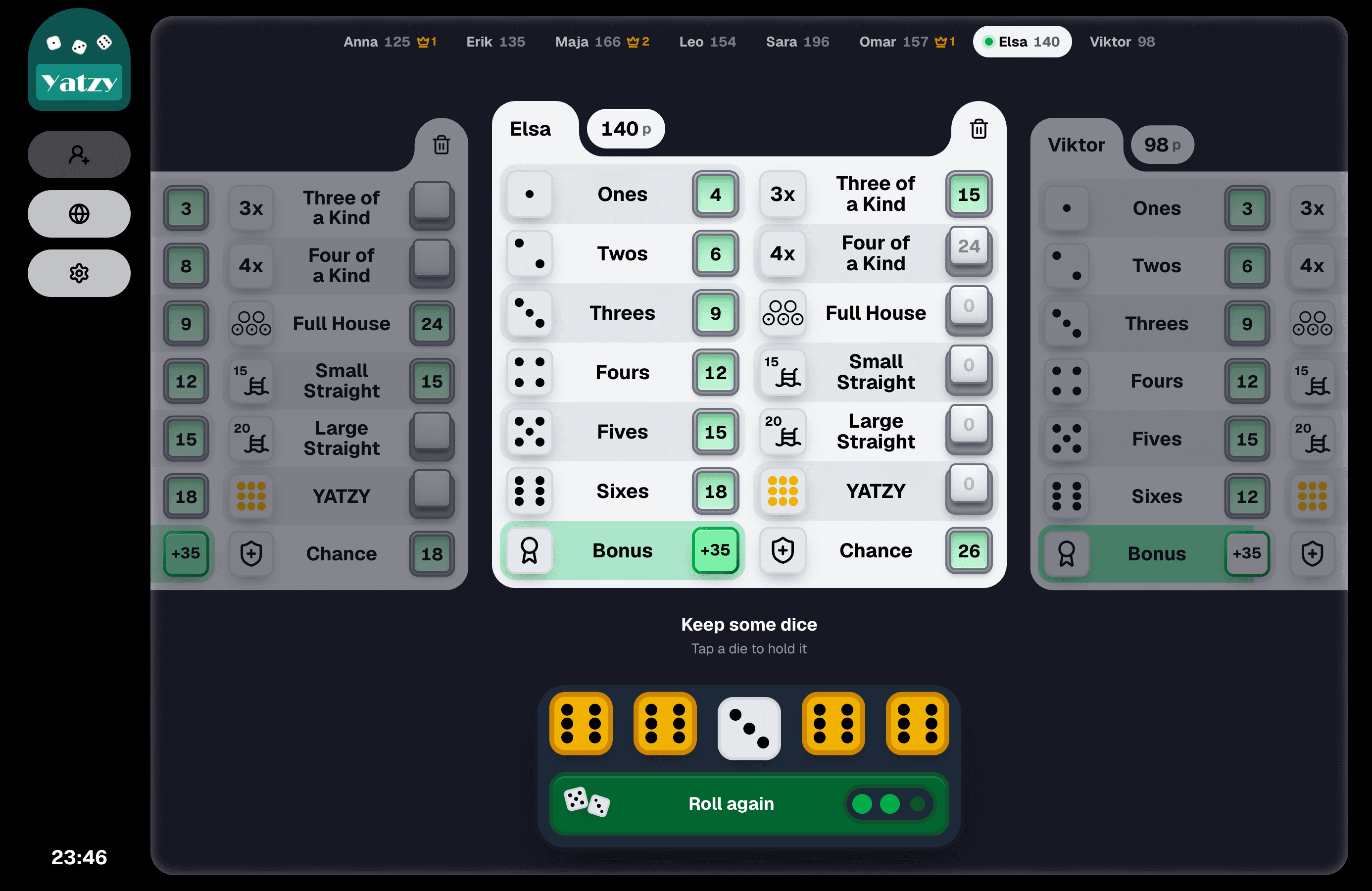
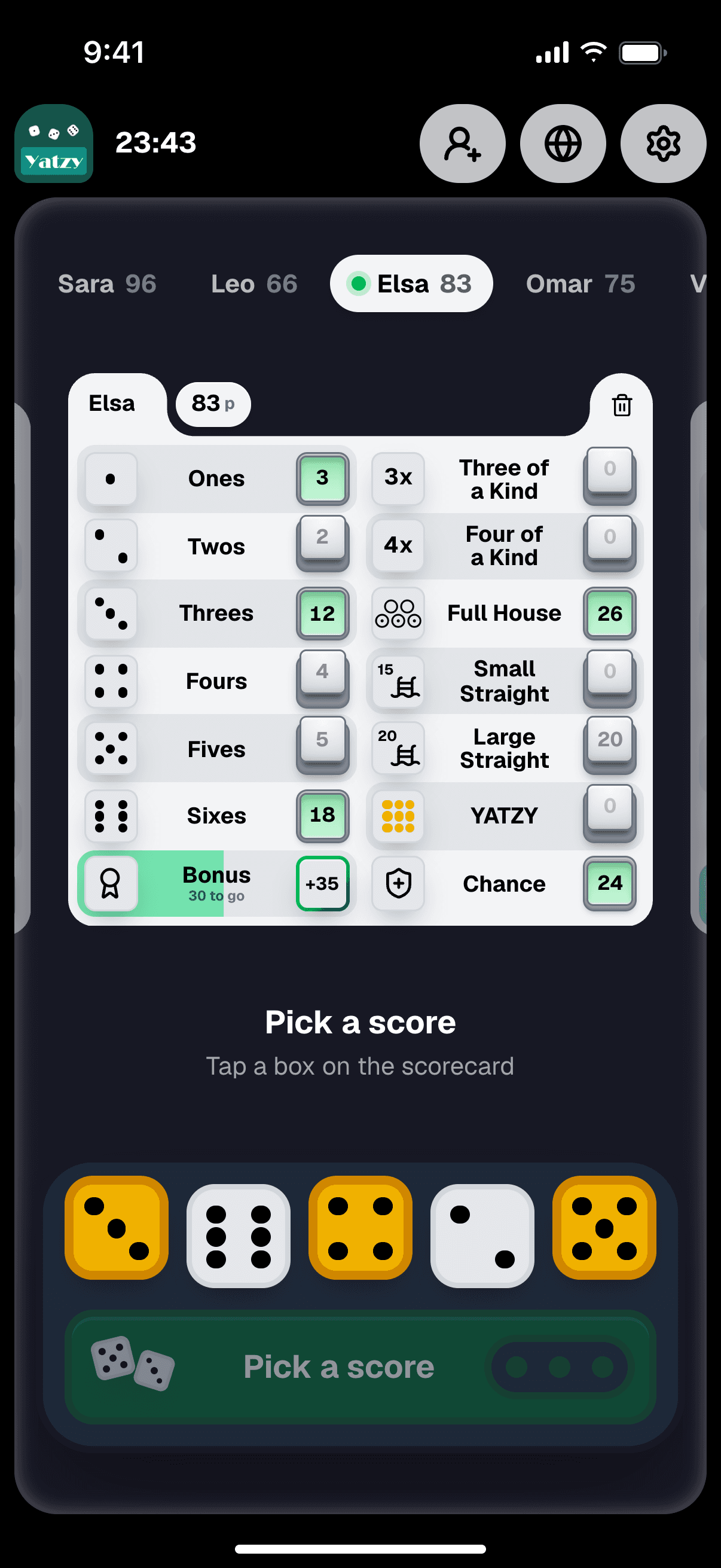
So this one is a scoresheet first. Every player has a card, the active one is lit, and the app's only jobs are rolling honestly and adding up correctly. Playing alone is the same game with one card, which turns out to be a very good way to spend a bus ride.
Rebuilt, same look
The first version was a desktop page. This one is a complete rebuild that keeps the design people liked, the rounded cards, the soft inner highlights and the chunky 3D score keys, and lays every screen out for a phone first. It is dark by default, and the original lavender table is one switch away in settings for anyone who prefers it.
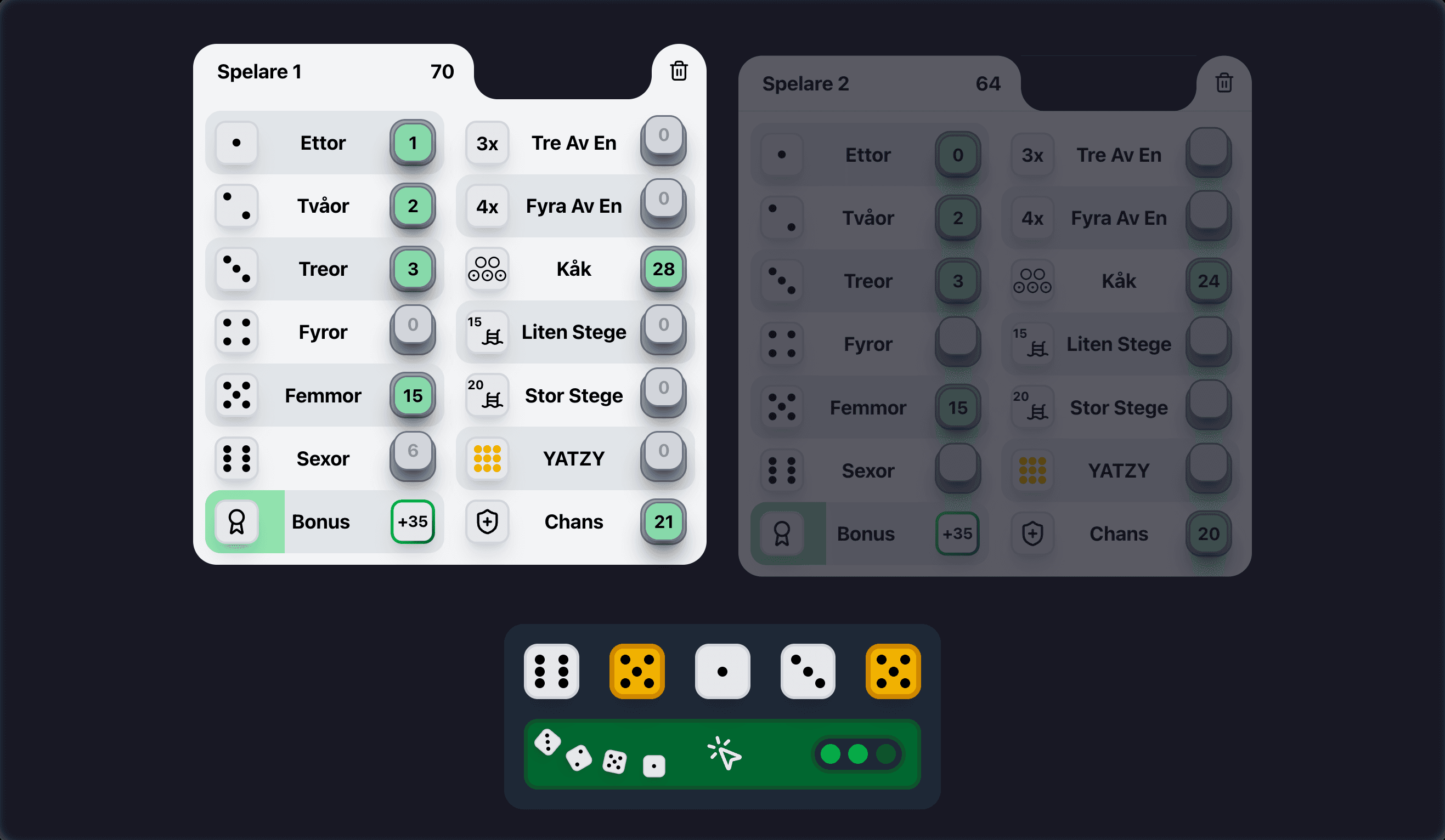
Cards sit side by side when there is room and turn into a swipeable carousel with name chips when there is not, so a table of eight still fits on a phone. Held dice stay obvious across rolls, because the most common table argument is about which dice were actually kept. On a keyboard, Space rolls, 1 to 5 hold dice and Enter passes to the next player. It speaks Swedish, German, English and Simplified Chinese.
Online, live
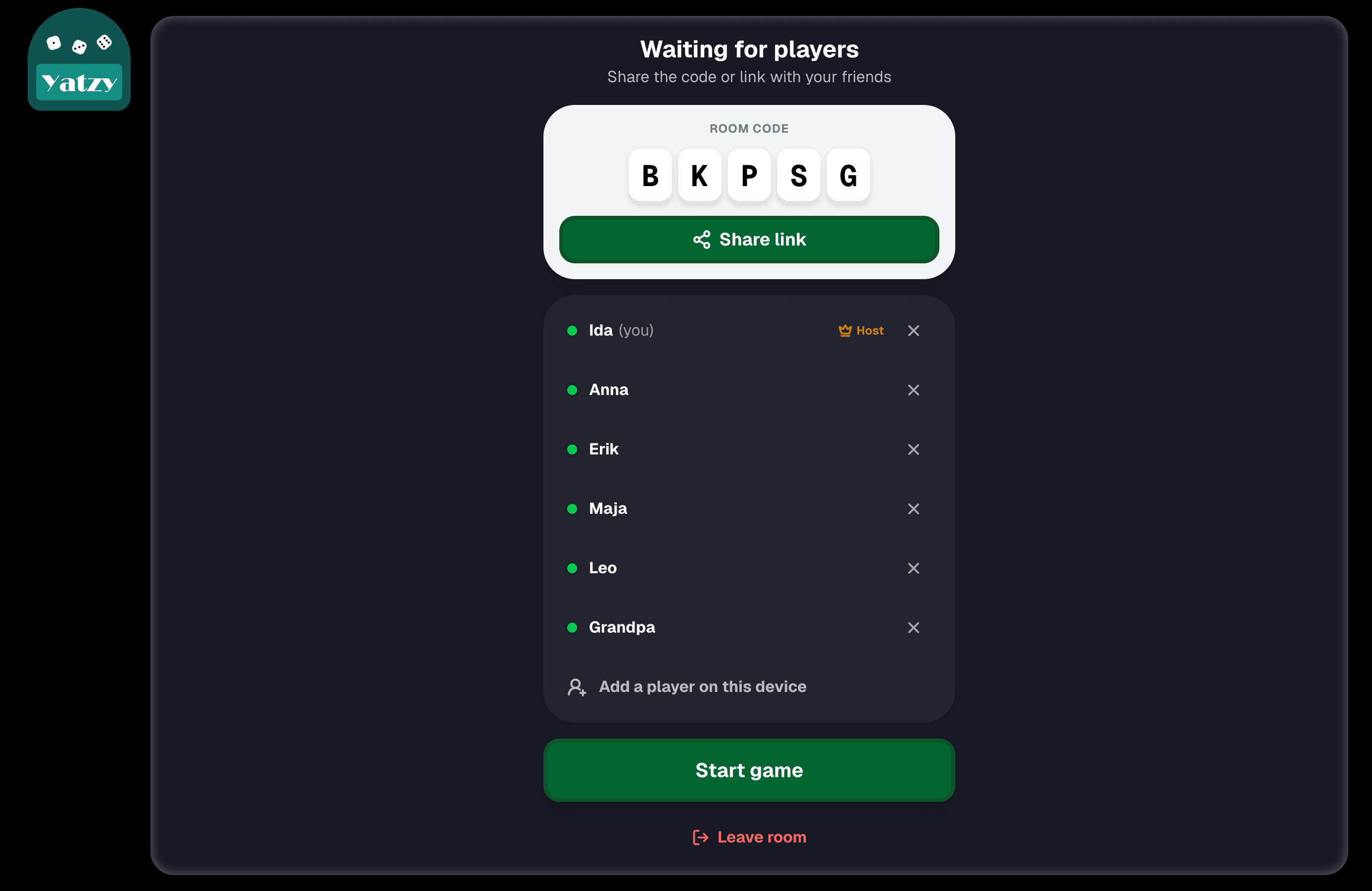
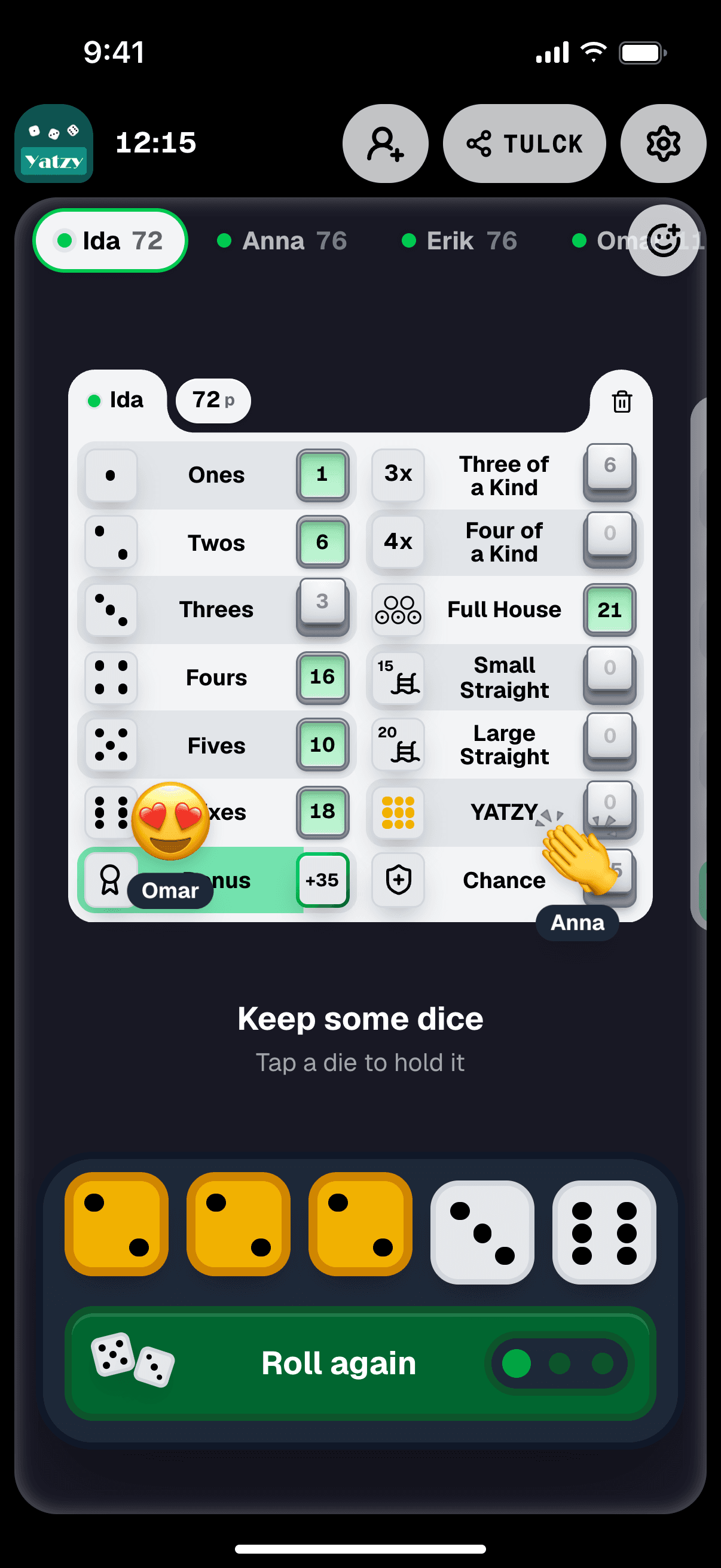
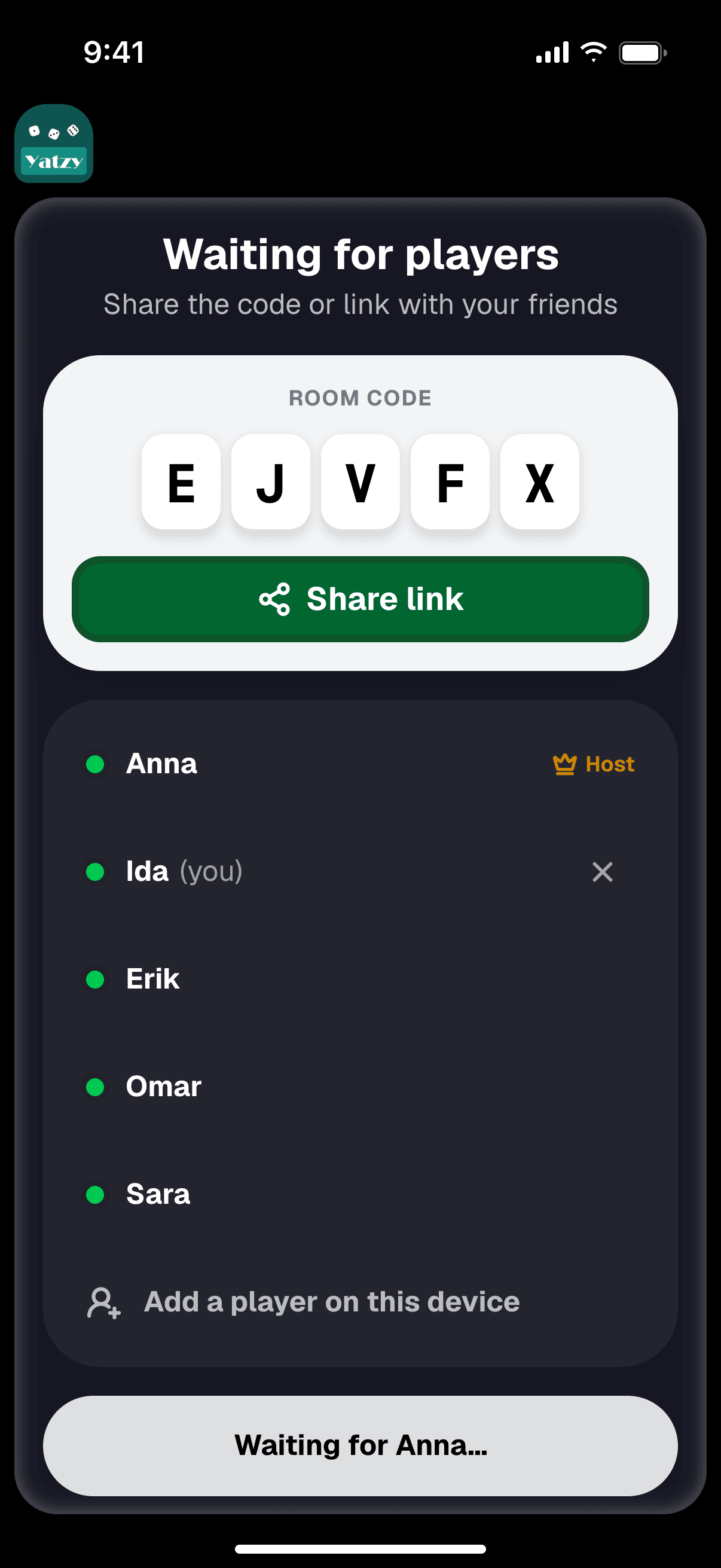
Open a room, share the five-letter code or the link, and everyone joins from their own phone. Every roll, held die and written score shows up on every screen as it happens, and a dot by each name says who is online, away or gone.
The small things are what make it work with real people. If the active player wanders off, the host can skip their turn after 30 seconds, and if the host leaves, hosting passes on. One phone can still hold several seats, so a grandparent without a phone plays from somebody else's. And there are reactions, seven emoji that float up the screen for everyone, which get used far more than anyone would admit.
How it is built
The game is a pure, serializable reducer. Dice values and ids come in through actions rather than being made inside it, so exactly the same code runs in the browser for local play and on the server for online play. The scoring rules are tested against the original game for all 7,776 possible rolls, and a local game is saved as you go, so a refresh never loses a round.
Each online room is a Cloudflare Durable Object that owns its game. Clients send intents over a WebSocket, and the room checks that the seat is theirs, rolls the dice itself and broadcasts the result to everyone. Moves that cannot surprise anyone, like holding a die or writing a score, show on your own screen before the server answers, so it feels as quick as playing alone.